
A gum graft, also called soft tissue grafting or gingival grafting, is a periodontal procedure used to restore or add gum tissue around teeth affected by gum recession. When gums recede, part of the tooth root becomes exposed. Unlike the crown of your tooth, the root is not protected by enamel, which can make it more vulnerable to sensitivity, wear and decay. During gum graft surgery, tissue may be taken from the roof of your mouth or another appropriate graft source and carefully placed where additional gum tissue is needed. Gum grafting may be performed around one tooth or several teeth, depending on the amount and location of recession. The goal is not simply cosmetic. A successful gum graft can help protect exposed root surfaces, strengthen the gumline, reduce sensitivity and help prevent additional recession.
Gum Grafting in Atlanta, GA
What Is Gum Grafting?
Quick Answer
Gum grafting replaces or adds gum tissue where recession has exposed the roots of your teeth. It is commonly performed by a periodontist, a dental specialist focused on the gums and supporting structures of the teeth.
Receding Gums Do Not Grow Back on Their Own
Do I Need a Gum Graft?
You may need a gum graft if your gum tissue has become thin or has pulled away from one or more teeth. Not every case of recession requires surgery. During your examination, Dr. McLaurin can measure the recession, evaluate the health and thickness of the surrounding gum tissue and determine whether the condition should be monitored or treated.
Signs of gum recession can include:
Some people notice recession themselves while others first learn about it during a dental examination. Even recession that is not painful may benefit from professional evaluation because exposed roots can become more vulnerable over time.
What Causes Gum Recession?
Gum recession does not have one single cause. Understanding why your gums are receding is important because successful treatment should address both the lost tissue and the factors that caused the recession. Periodontal disease is one possible cause, but healthy patients can also develop recession because of their anatomy, brushing habits or other factors. Dr. McLaurin evaluates the entire gumline and supporting structures before recommending treatment.
- Periodontal disease and inflammation around the teeth
- Aggressive tooth brushing or repeated trauma to the gumline
- Naturally thin gum tissue or inherited anatomy
- Tooth position or alignment that places stress on thin gum tissue
- Previous orthodontic movement in susceptible areas
- Tobacco use and other factors that affect periodontal health
- Trauma or oral piercings that repeatedly contact the gums
Types of Gum Grafts
There are several techniques used to treat gum recession. The best approach depends on the thickness of your existing gum tissue, the location and severity of recession, how many teeth are involved and your treatment goals. Dr. McLaurin will recommend the technique and graft material that are appropriate for your individual anatomy.
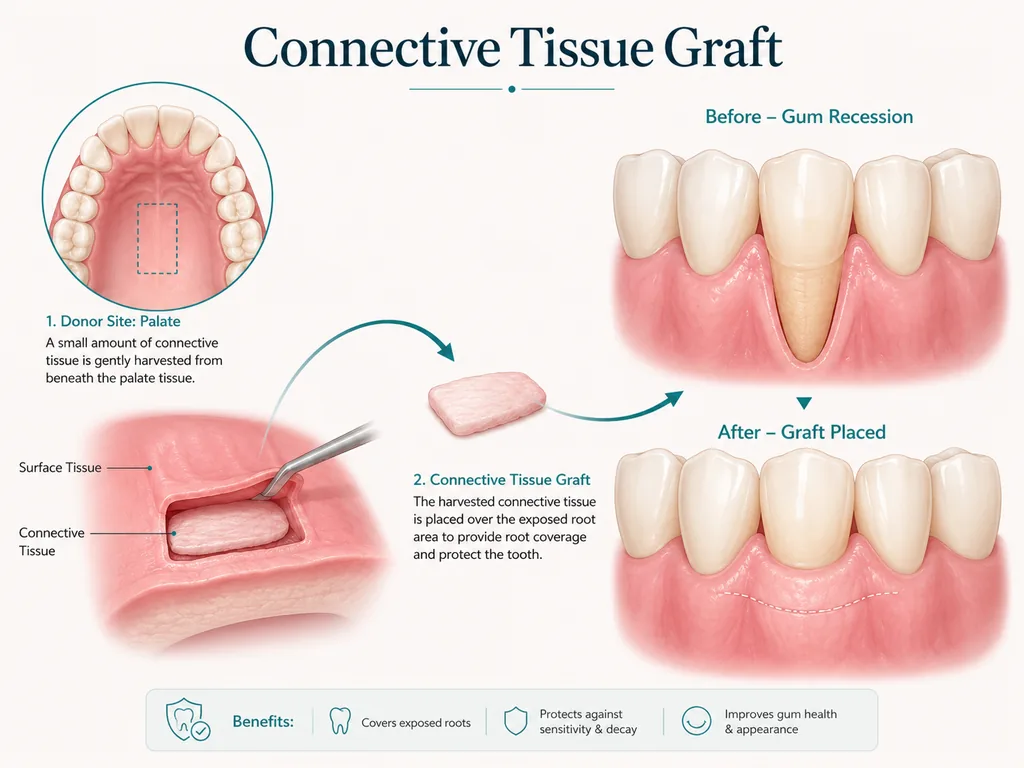
Connective Tissue Graft
A connective tissue graft uses a small amount of tissue taken from beneath the surface of the palate. The tissue is carefully placed over or around an exposed tooth root to restore gum coverage. This is one of the most commonly used gum grafting techniques for treating recession and protecting exposed roots.
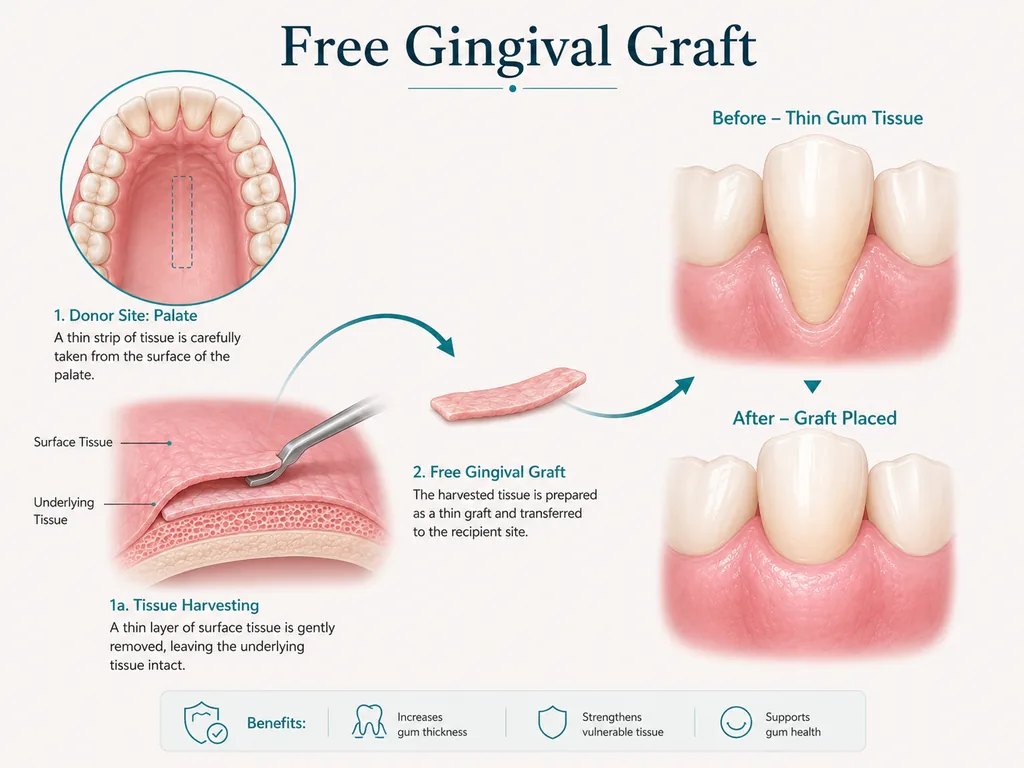
Free Gingival Graft
A free gingival graft uses a thin layer of tissue taken directly from the surface of the palate. The graft is placed where additional gum thickness is needed. This technique can be especially useful for strengthening naturally thin or vulnerable gum tissue and helping protect areas that may be prone to further recession.
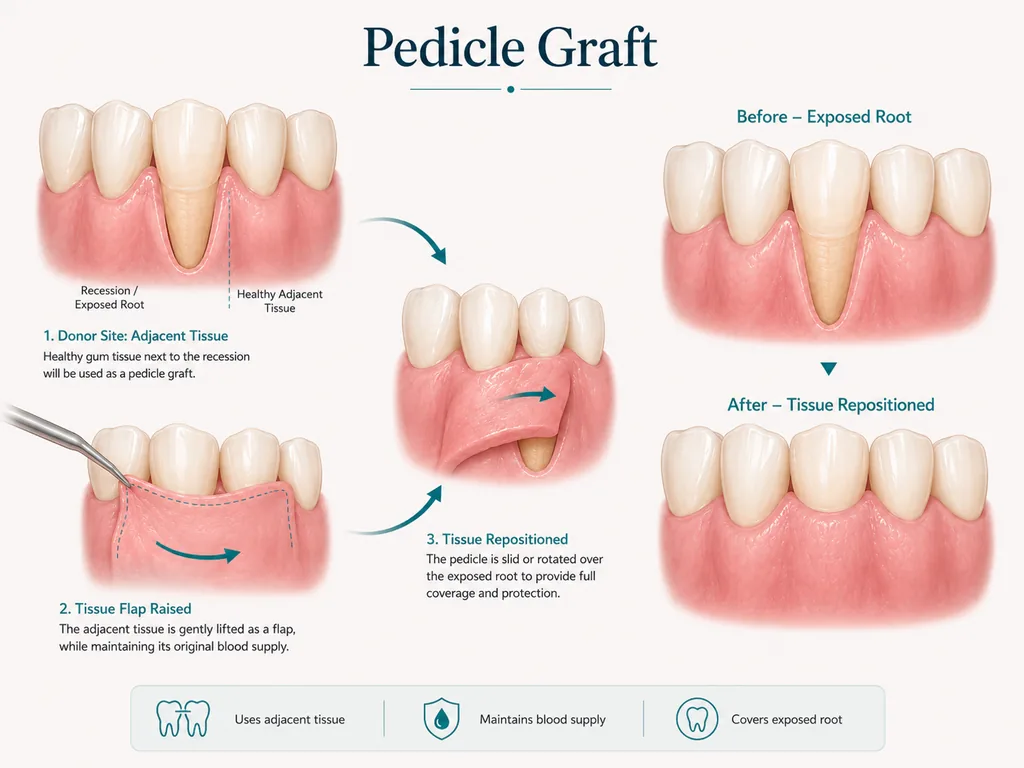
Pedicle Graft
A pedicle graft uses healthy gum tissue located next to the area of recession. The tissue is partially repositioned over the exposed root while remaining connected to its original blood supply. In selected cases, this technique can provide effective root coverage without requiring tissue to be harvested from the palate.
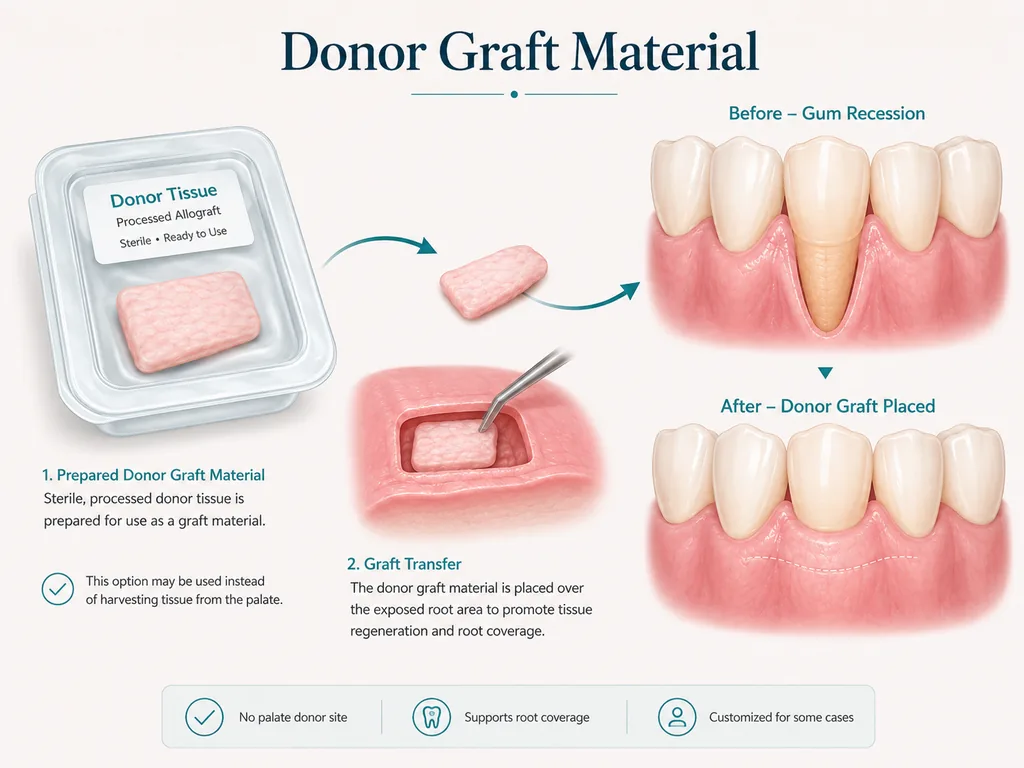
Donor Graft Material
Processed donor tissue or another appropriate graft material may sometimes be used instead of harvesting tissue from the patient’s palate. This can eliminate a second surgical site and may be useful when treating certain areas or multiple teeth. Dr. McLaurin will determine which graft material is most appropriate for your individual needs.
Benefits of Gum Graft Surgery
- Protect exposed tooth roots from continued wear and environmental exposure
- Reduce tooth sensitivity associated with exposed root surfaces
- Help reduce additional gum recession by strengthening vulnerable tissue
- Reduce the risk of root decay by providing better coverage of vulnerable root surfaces
- Create a more even gumline and improve the appearance of teeth that look unusually long
- Support long-term periodontal health by improving the quality and amount of protective gum tissue
What Happens During Gum Graft Surgery?
Your appointment begins with a careful evaluation and treatment plan. Dr. McLaurin will discuss which teeth need treatment, what type of graft is appropriate and what you can expect during healing.
- The treatment area is numbed. Local anesthesia is typically used so you remain comfortable during the procedure.
- The recipient site is prepared. The exposed root and surrounding gum tissue are prepared for the graft.
- The graft is obtained. Depending on the technique, tissue may come from your palate, nearby gum tissue or an appropriate donor source.
- The graft is positioned. The tissue is carefully placed where additional gum coverage or thickness is needed.
- The graft is stabilized. Sutures may be used to hold the tissue securely while it begins healing.
- Your healing is monitored. Follow-up visits allow Dr. McLaurin to evaluate the graft and give you instructions for gradually returning to normal brushing and eating.
The procedure may involve one tooth or several teeth during the same appointment. Your treatment plan will be based on your individual needs.
Advanced Healing Options: PRGF
Atlanta Periodontics has incorporated Plasma Rich in Growth Factors, or PRGF, into surgical cases including gum grafting. PRGF is prepared from a small sample of your own blood and concentrates proteins involved in your body’s natural healing and tissue regeneration processes. Depending on your health, procedure and treatment needs, Dr. McLaurin can discuss whether incorporating PRGF into your gum graft procedure may be appropriate for you.
Gum Graft Recovery and Healing
Healing varies from patient to patient and depends on the type of graft and how many areas are treated. Many patients feel substantially better within one to two weeks, although the grafted tissue continues to mature after the initial recovery period. Dr. McLaurin will provide instructions specific to your procedure. During early healing, you may be asked to eat softer foods, avoid brushing or flossing directly over the surgical site, avoid pulling on the lip or cheek to inspect the graft and temporarily avoid strenuous activity. Carefully following your postoperative instructions is important because the graft needs time to establish a healthy blood supply and integrate with the surrounding tissue. Contact Atlanta Periodontics if you experience unusual bleeding, worsening swelling, signs of infection or anything about your recovery that concerns you.
- Follow your personalized postoperative instructions
- Choose soft foods as directed
- Keep pressure and trauma away from the graft
- Do not brush directly over the surgical site until instructed
- Attend scheduled follow-up appointments
Why Choose Dr. Gail McLaurin for Gum Grafting in Atlanta?
Gum grafting is a delicate periodontal procedure, and experience matters. Dr. Gail McLaurin, DMD completed her periodontal specialty training through Emory University’s postdoctoral dental program and has practiced in Atlanta for more than three decades. Her practice focuses on the gums, supporting tissues and advanced periodontal care. At Atlanta Periodontics, treatment begins with understanding why recession occurred and what each patient actually needs. Not every receding gumline requires the same procedure, and not every patient requires surgery. Dr. McLaurin evaluates your periodontal health, tooth position, gum thickness, recession pattern, sensitivity and personal goals before recommending treatment.
Convenient Atlanta Location
Atlanta Periodontics is located at 5555 Peachtree Dunwoody Rd NE, Suite G73, Atlanta, GA 30342, near Northside Hospital and Children’s Healthcare of Atlanta. We welcome patients from Atlanta, Sandy Springs, Dunwoody, Buckhead, Brookhaven and communities throughout Metro Atlanta.
Gum Grafting FAQ
How do I know if I need a gum graft?
You may benefit from a gum graft if you have exposed tooth roots, progressive gum recession, sensitivity, thin gum tissue or a gumline that is becoming increasingly uneven. A periodontal examination is necessary to determine whether grafting is recommended or whether the area can simply be monitored.
Can receding gums grow back?
Receded gum tissue generally does not grow back on its own. Treatment can help control the cause of recession and protect the tooth. When additional tissue or root coverage is needed, gum grafting can restore tissue to the affected area.
Is gum graft surgery painful?
The treatment area is numbed with local anesthesia during gum graft surgery. After the procedure, some soreness or swelling is normal as the tissues heal. The amount of discomfort varies depending on the graft technique, number of areas treated and the individual patient. Atlanta Periodontics also offers sedation options for patients with dental anxiety.
How long does gum graft recovery take?
Many patients feel substantially better within one to two weeks, although the graft continues to heal and mature beyond the initial recovery period. Your exact recovery depends on the type of graft, the number of teeth treated and your individual healing response.
Can gum grafting treat more than one tooth?
Yes. Gum grafting can be performed around a single tooth or multiple teeth. Dr. McLaurin will determine whether treating several areas during the same procedure is appropriate for your specific case.
Will a gum graft help sensitive teeth?
Gum recession can expose root surfaces that are sensitive to cold, sweets, brushing and other stimulation. By providing additional coverage and protection to an exposed root, gum grafting may significantly reduce sensitivity for some patients. Results vary depending on the cause of the sensitivity and the amount of root coverage that can be achieved.
How long does a gum graft last?
A successfully healed gum graft can provide long-term protection, but maintaining the result also requires controlling the factors that contributed to recession. Proper brushing technique, periodontal maintenance and addressing gum disease or other contributing factors are important for long-term stability.
Does dental insurance cover gum grafting?
Coverage depends on your dental insurance plan, why the procedure is being performed and the specifics of your treatment. Gum grafting performed to protect periodontal health may receive different coverage than treatment performed primarily for cosmetic reasons. Our team can help you understand your treatment plan and available insurance information.
How much does gum graft surgery cost in Atlanta?
The cost of gum grafting varies based on how many teeth require treatment, the grafting technique and material used, whether additional periodontal treatment is needed and your dental insurance benefits. After your examination, Atlanta Periodontics can provide a treatment plan based on your individual needs.
Ask Us a Question!
Tell us what you are noticing about your gums or teeth and our office will follow up with you.